
Commercial solar is usually described by its size in kilowatts. The more useful description is how the array fits the building: its roof, its structure and the way it uses power. Two projects in Sydney sit at opposite ends of that.
A roof with room: Valentine Sports Park
Valentine Sports Park at Glenwood is Football NSW's home ground. Field lighting, offices and training facilities run most days of the week. The 99.88 kW system has 227 panels across the park's building roofs, tied into the existing electrical systems so the generation feeds that load directly instead of being exported and bought back. It generates about 150 MWh a year.
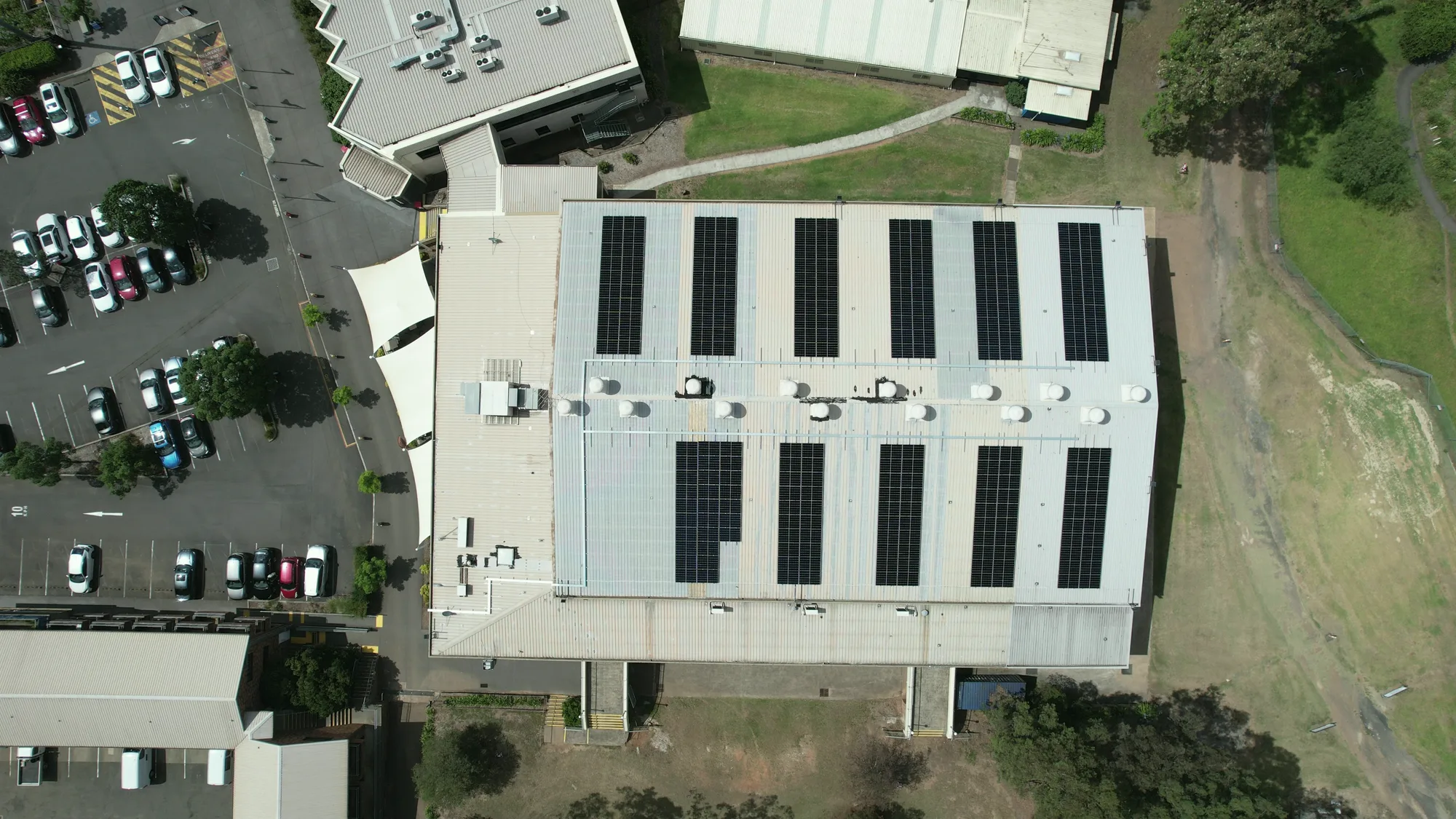
The size is not an accident. In Australia, systems under 100 kW are treated as small-scale under the federal Renewable Energy Target, and many commercial arrays are designed to sit just below that line.
A roof with no room: Two Murray Rose Avenue
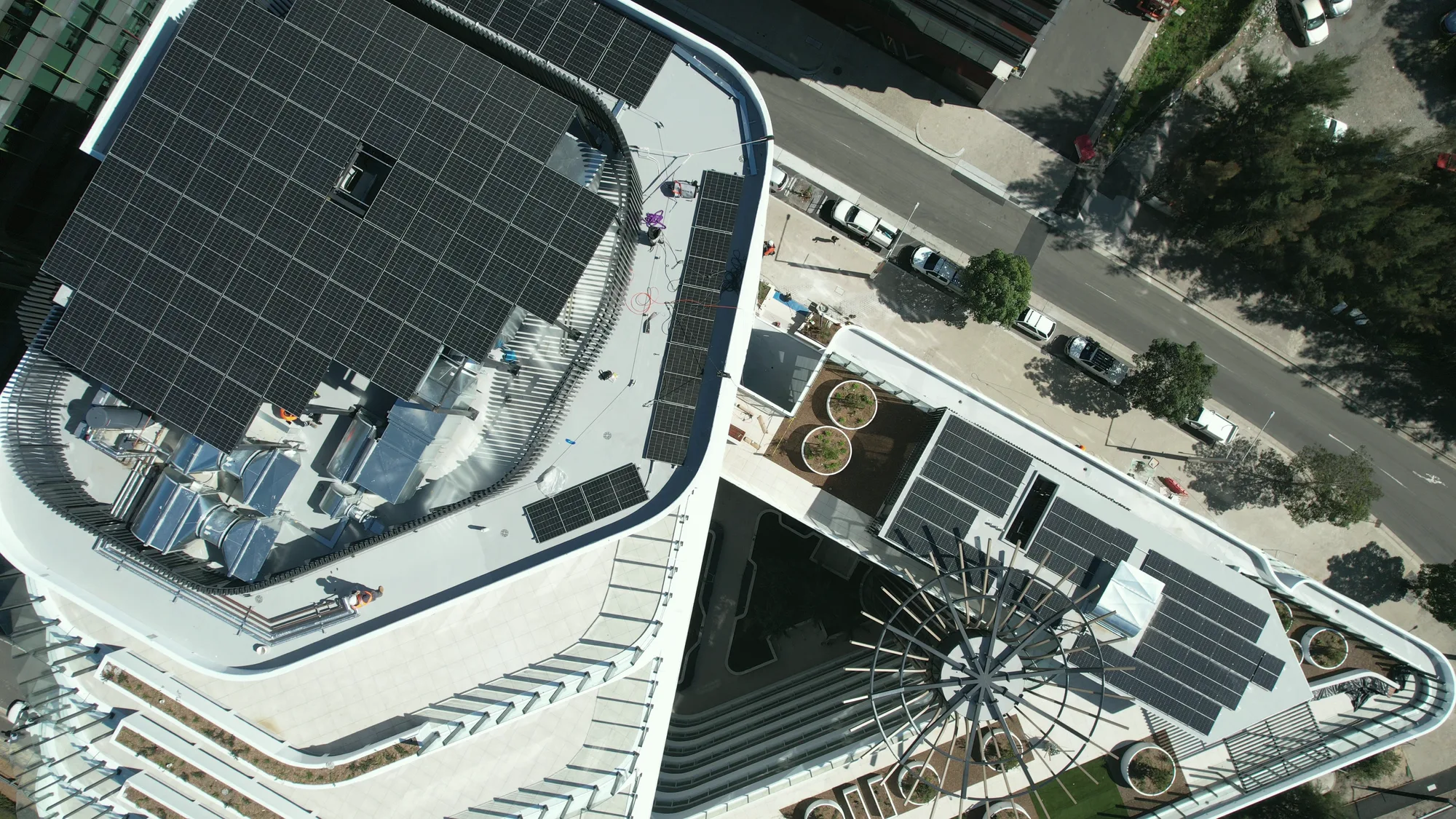
Two Murray Rose Avenue at Sydney Olympic Park is on track to become the first residential high-rise in Australia rated 6 Star Green Star. Its roof was already crowded. The array had to keep half-metre code clearances and sit on a concrete deck that had to stay waterproof. It was built with Ampcore Electrical.
Where Level 15 ran out of room, the dual-glass panels became the roof of a custom steel canopy. The canopy does two jobs: it is a roof, and it generates. The finished system is 59.4 kW and generates 89,264 kWh a year.
What the two have in common
Read together, the two projects make the same point. The limits were set by the building: at Glenwood by the load the array feeds, at Sydney Olympic Park by clearances, waterproofing and structure. The panel count followed.
For an organisation weighing a power purchase agreement, these are the questions a site assessment answers before a price is agreed. See both case studies, or read how we structure an agreement.